

Why does my washer smell? How to get rid of bad odors
A washer that smells bad often has a buildup of detergent residue, body oils, and dirt. This is called scrud or washer buildup.
This buildup can develop when you regularly wash at low temperatures, use too much detergent, or add fabric softener.
Fortunately, you can usually get rid of unpleasant washer odors by thoroughly cleaning the individual parts of your machine and running a hot maintenance cycle regularly.
In this guide, you'll learn why your washer smells, how to remove unpleasant odors, and which cleaning products are best to use.
Jump to:
Why does a washer smell?
Does your washer smell musty, like sewage, or even like rotten eggs? A smelly washer is often the result of insufficient maintenance, which allows residue and grime to build up inside the machine.
You might assume that a washer cleans itself because water and detergent constantly flow through it. Unfortunately, that's not how it works.
Every wash cycle leaves behind small amounts of dirt and residue, including detergent, body oils, dead skin cells, hair, and dirt from clothing. Combined with moisture, these deposits accumulate and create an environment where bacteria and other microorganisms can grow.
This buildup consists of a sticky layer of grease, detergent residue, and dirt.
It can accumulate in several places:
In and behind the rubber door seal.
Inside the detergent drawer and the compartment behind it.
Inside the drum and internal hoses.
Around the filter and drain system.
Have you thoroughly cleaned your washer, but your laundry still smells musty after washing or your machine smells like sewage? This could indicate a drainage problem or a technical issue.
Why are newer washers more prone to detergent and grime buildup?
Energy and water efficiency have become increasingly important over the past 20 years. Modern washers are designed to use less water and electricity. The Eco 40–60 program is a good example of this. It wasn't available 20 years ago.
Washing efficiently means using relatively little water and often washing at lower temperatures. This helps reduce energy consumption, but it also means that grease and detergent residue are less frequently flushed away during hot wash cycles.
Do you almost always wash at 30°C or 40°C? Or do you mainly use the Eco 40–60 program? If so, it's a good idea to occasionally run a wash cycle at 60°C or 90°C without using an Eco setting.
Always check that both your washer and the items you're washing are suitable for these temperatures.
What does the smell tell you?
The type of odor coming from your washer can often help you identify the cause. Not every smelly washer has the same problem. The smell itself can provide a useful clue.
| Smell | Possible cause | What you can do |
|---|---|---|
| Musty or moldy | Detergent and grime buildup (vetluis). | Clean the drum, rubber door seal, detergent drawer, and filter. Then run a hot maintenance cycle. |
| Sewage-like | A drainage problem, such as an issue with the drain hose or drain trap, or standing water. | Check the drain hose and drain trap, and make sure water drains properly. |
| Rotten eggs | Detergent and grime buildup or a drainage problem. | Clean the machine and check the filter, drain, and drain hose. If the smell returns, have the drainage system inspected. |
| Strong detergent smell | Too much detergent or fabric softener, leaving residue behind. | Adjust the detergent dosage according to the packaging, consider stopping the use of fabric softener, and clean the detergent drawer. |
Why does my washer smell like sewage?
If your washer continues to smell like sewage, the cause is probably not detergent and grime buildup alone.
Check the following:
Whether the drain hose is properly connected and not kinked.
Whether the drain trap (the U-shaped or built-in bend in the drainpipe) is clean.
Whether water is being left behind in the drum or drainage system.
Poor drainage can allow unpleasant odors from the drain to travel back into your washer.
How to get rid of bad washer odors
Start by cleaning the parts of your washer where dirt and moisture are most likely to accumulate.
1. Run a maintenance cycle
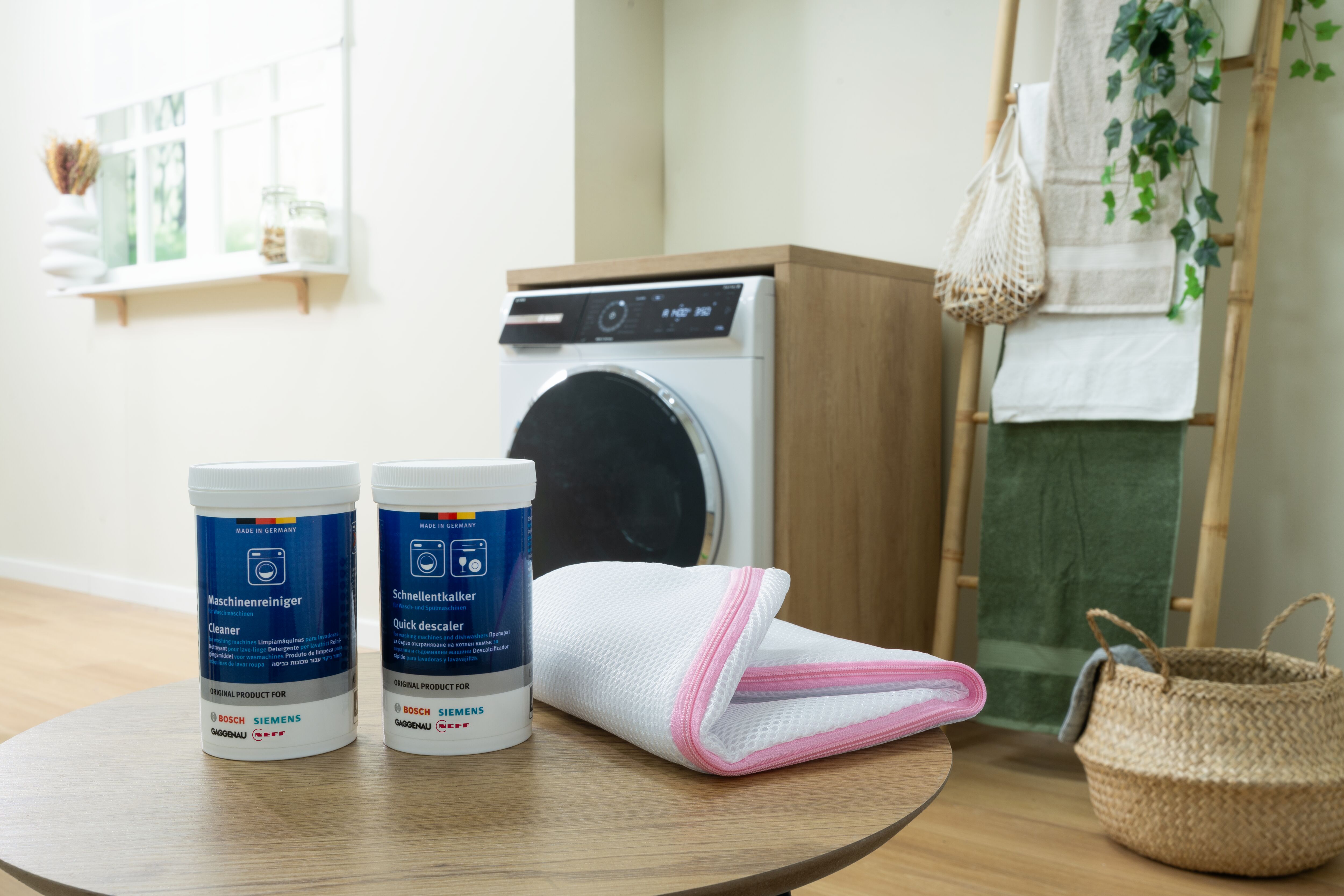
Make sure the washer is empty.
Does your washer have a dedicated maintenance or drum-cleaning program? Run it according to the instructions in the user manual.
If your washer doesn't have a maintenance program, run a hot wash cycle at 60°C once a month. A hot cycle helps reduce leftover detergent, grease, and dirt.
If you're using a washer cleaner, check both the washer manual and the cleaner's instructions first. Use only the recommended amount and the appropriate program.
Want to learn more? Read our detailed guide on how to clean your washer and find out whether you can use vinegar to clean it.
2. Clean the washer door seal
Carefully but thoroughly wipe the rubber door seal with a cloth and warm water. Make sure you clean both the inside and outside of the seal. Don't forget to wipe down the inside and outside of the washer door as well. Find out more about how to clean your washer's rubber door seal.
3. Clean the detergent drawer
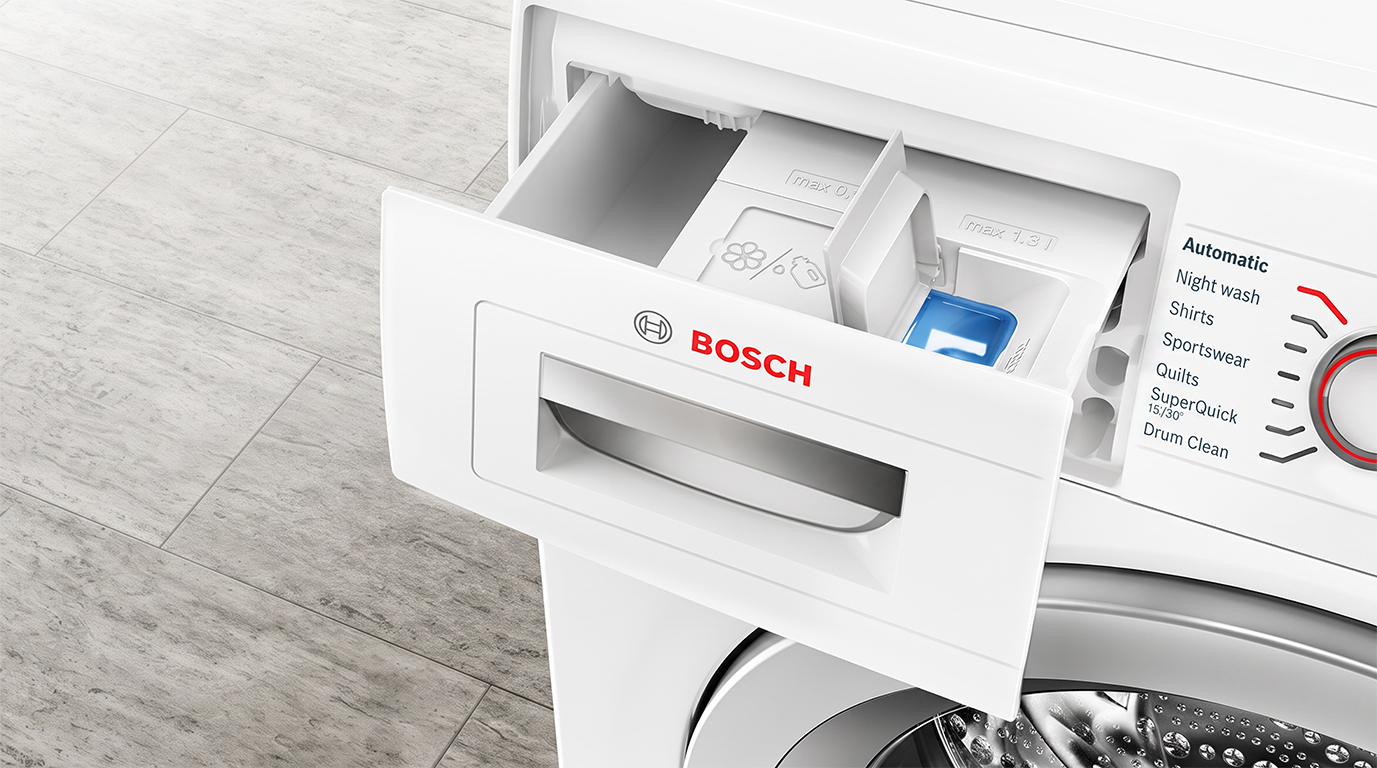
Detergent and fabric softener residue can build up inside the detergent drawer over time.
Follow these steps to clean it:
Pull out the detergent drawer until it stops. On most washers, you'll find a small marking, symbol, or the word "push" near the middle of the drawer, above the fabric softener compartment. Press this release mechanism and pull the drawer all the way out.
Rinse the drawer under running water.
Use warm water and a cloth to remove detergent and fabric softener residue.
Avoid using harsh cleaning products.
Check the compartment where the drawer sits and clean it if necessary.
Make sure the drawer is completely dry before putting it back.
4. Check the filter
Hair, lint, and small objects can collect in the washer filter. Check your washer's filter and remove any debris you find. Consult your user manual if you're unsure how to access it.
5. Check the drain hose and drain trap
Does your washer smell like sewage? In that case, check the drainage system as well as the washer itself. Look for blockages or kinks in the drain hose and make sure it is properly connected to the drain trap. Also check whether water is being left behind anywhere, for example, inside the drum.
Which washer cleaners should you use?
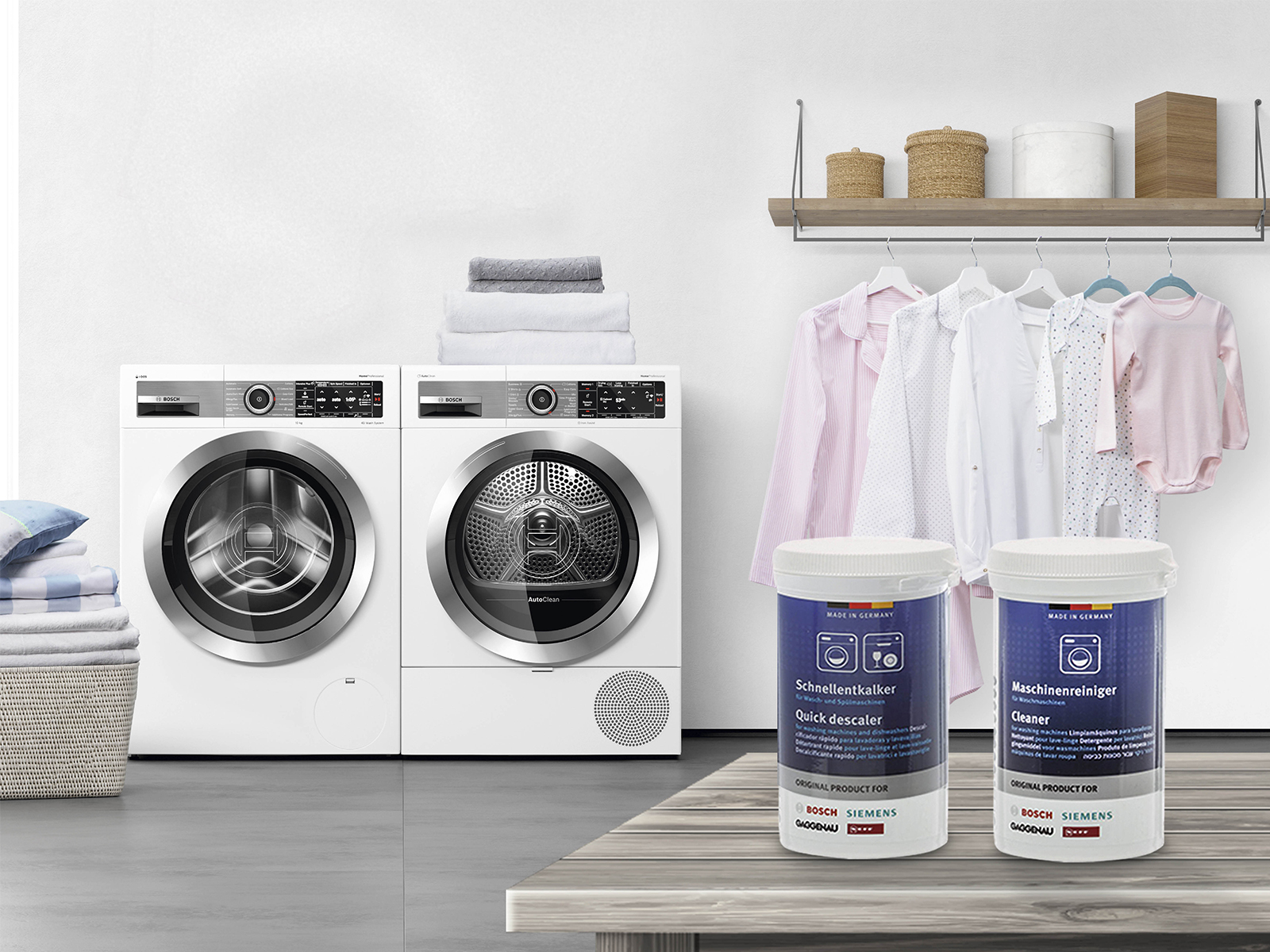
The best cleaning product for your washer is a cleaner specifically designed for washers. These products are formulated to clean your machine safely and remove buildup. A washer cleaner is suitable for regular maintenance and helps remove residue, dirt, and unpleasant odors. Always read the instructions and recommended dosage on the packaging before use.
Baking soda and vinegar are also commonly mentioned as cleaning solutions. However, regular use can damage certain washer components. That's why we recommend using a dedicated washer cleaner instead.
Why shouldn't you use vinegar in your washer? You can use vinegar occasionally, but you shouldn't use too much or use it too frequently. The acid can damage rubber seals and plastic components over time.
Can you clean a washer with a dishwasher tablet? No, we don't recommend it. Dishwasher tablets are designed to clean dishes, not washers. Using them in your washer can potentially damage internal components.
How can I make my washer smell fresh?
A fresh-smelling washer doesn't start with using more detergent or fabric softener. In fact, using too much of either can leave residue behind, contributing to unpleasant odors.
So how can you keep your washer clean and smelling fresh?
Use the correct amount of detergent. Always check the recommended dosage on the packaging.
Consider avoiding fabric softener.
Remove your laundry as soon as the wash cycle has finished.
Leave the washer door and detergent drawer slightly open after each wash. This allows moisture to escape and helps the machine dry.
Clean and maintain your washer regularly.
When is it a technical problem?
Sometimes, a smelly washer isn't caused by dirt, grease, or detergent residue. In that case, cleaning and regular maintenance may not solve the problem.
Does the smell keep coming back even after you've thoroughly cleaned the machine? Or does the problem occur despite regular maintenance? There may be another underlying cause.
The following signs could indicate a technical problem:
Water remains inside the washer or doesn't drain properly.
The sewage smell keeps coming back.
The drain hose isn't working properly or appears to be blocked.
An error code appears on the display.
The machine makes unusual noises during a wash or drain cycle.
If you notice any of these issues, consult your washer's user manual. Still can't figure out what's wrong? Contact the manufacturer or a qualified appliance technician. Bought your washer from us? You can count on our service team for assistance. Plus, you'll receive a 5-year warranty.
How to clean a Bosch washer
Do you own a Bosch washer? You can find information about maintenance and cleaning in our blog articles, your washer's user manual, and on the official Bosch website. Did you buy your washer from us? Get in touch if something isn't working properly, you have a question, or you've misplaced your user manual. We're happy to help.
Does a Bosch washer have a maintenance program?
Some Bosch washers have a dedicated Drum Clean program (Trommel reinigen). You can find out whether your model has this feature by checking the user manual. On certain models, an indicator light will flash when it's time to clean the drum. Always run the Drum Clean program without any laundry inside the machine. Does your Bosch washer not have this program? Simply follow the cleaning steps in this guide.
What temperature should you use for the Drum Clean program on a Bosch washer?
The temperature is likely to be 60°C or higher. If your Bosch washer has a dedicated Drum Clean program, check the user manual to find out which temperature to use.
Which washer cleaner does Bosch recommend?
Bosch recommends using a dedicated Bosch washer cleaner. You can find a suitable cleaning product for your specific model on the Bosch website. Bought your washer from us? You'll receive 15% off Bosch accessories and cleaning products.
Our washers
When you buy a washer from us, you get more than just the appliance. You also receive a 5-year warranty and discounts on Bosch accessories. We also deliver and install your new washer and take your old one away. You don't pay anything extra for these services. They're all included in the price.


